"/>
"/> "/>
"/>Spanish Snack Manufacturer RISI Cuts Critical Spare Parts Costs by 50% with Industrial 3D Printing
RISI, a leading Spanish snack manufacturer, has transformed its maintenance model by integrating the BCN3D 3D Printers. What once depended on international suppliers with unacceptable lead times is now handled in-house, with parts that, in some cases, outperform the originals.
RISI: Over 50 Years Making the Snacks of a Generation
Founded in 1970, RISI is the second largest Spanish producer of snacks and appetizers, with brands such as Gusanitos, Risketos, Palomitas and Triskys, more than 250 employees and factories in Daganzo de Arriba and Loeches (Madrid) and Marchena (Seville). A large-scale industrial operation where maintenance is not a support department: it is a strategic asset.
With highly automated production lines running at a demanding pace, the maintenance department carries a critical responsibility: ensuring every piece of equipment is available, operational, and performing at its best. Leading this effort is the Maintenance Manager, Fernando Gonzalez, who oversees both production equipment and facilities management, including utilities control.
The challenge: spare parts that arrive late and cost too much
Certain components were only available through highly specialised suppliers (often overseas) who imposed minimum order volumes that were hard to justify for a single part, and lead times that put equipment availability at risk. By the time material, engineering and shipping costs were factored in, the price was simply out of proportion.
“Lead times tend to be longer, and the cost is excessive on some parts, both in terms of materials and the engineering involved.”
The solution: make it in-house, and make it better
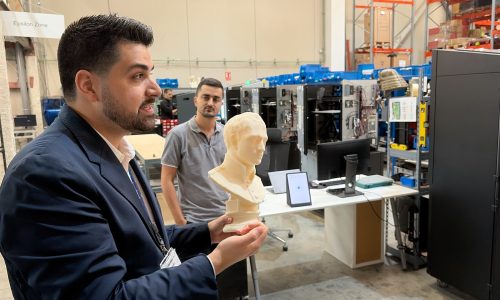
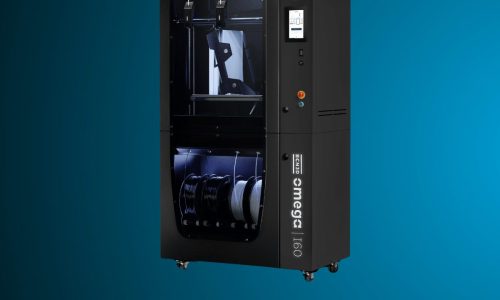
After evaluating BCN3D’s track record in industrial environments and its technical support offering, RISI brought in the Epsilon W50. The onboarding was straightforward: hands-on training, an intuitive interface, and compatibility with filaments from trusted manufacturers like BASF and Mitsubishi through BCN3D Stratos.
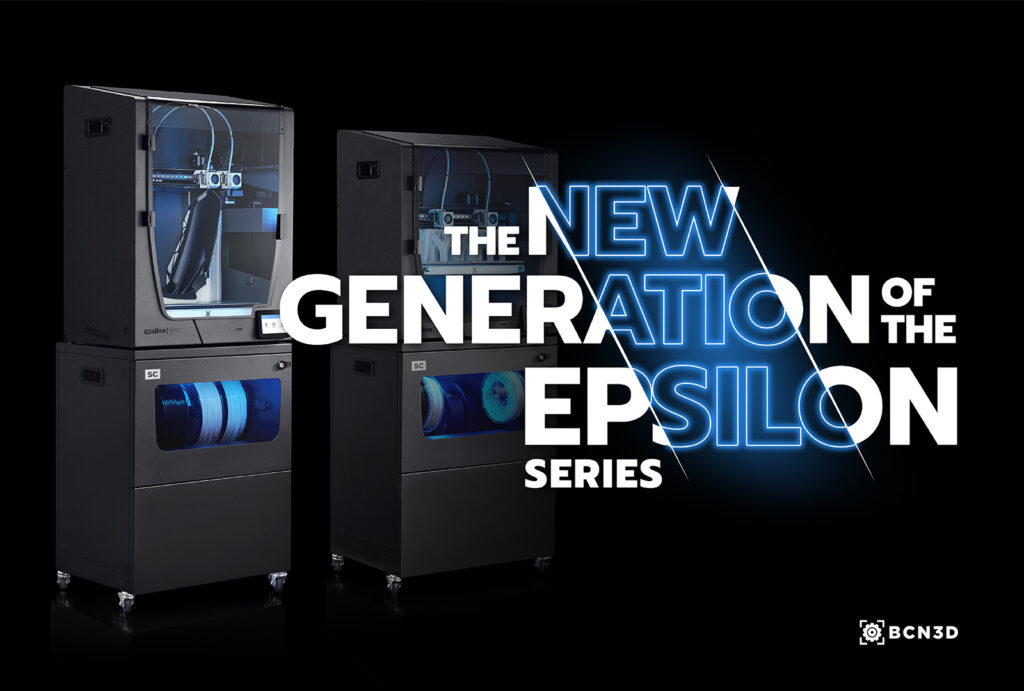
What turned out to be most significant, though, was not simply replicating existing parts, it was improving them. Components originally made by injection moulding were over-engineered for stiffness, resulting in unnecessary weight and excess material. By approaching them with 3D printing, the team was able to fine-tune infill densities and produce parts with exactly the right mechanical properties for each application.
“In some cases, quality actually improves when we use less rigid elements. We can test different densities and get better performance once the parts are fitted to the machinery.”
Results and what comes next
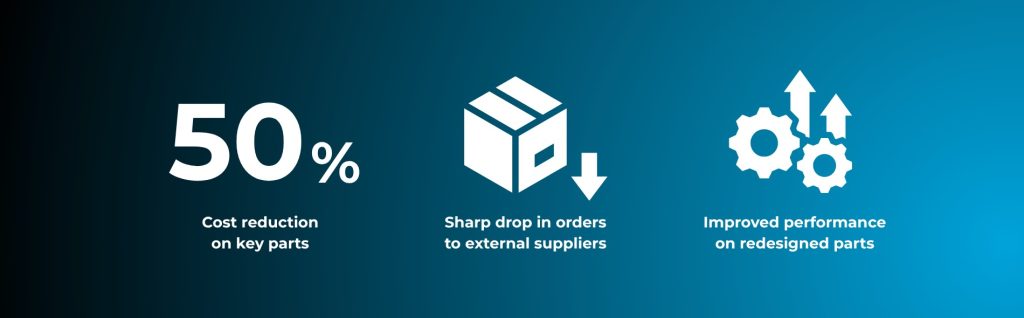
Five months into using the Epsilon W50, the impact is already clear across several fronts. Costs on certain parts have dropped by around 50%, reliance on external suppliers has fallen significantly, and equipment availability has improved. Perhaps the most unexpected outcome, though, has been cultural: the technology has become a catalyst for innovation within the technical team.
Looking ahead, RISI plans to expand its materials range, with particular interest in metals and alloys, to tackle even more demanding applications. A natural next step for a team that has reached a clear conclusion after these first months: industrial 3D printing is not a technological promise. It is a real, measurable competitive advantage.